Comparing looks without decision fatigue
Render wide, judge narrow. A repeatable three-pass method for choosing between dozens of generated looks without burning out on the twelfth one.
Choice is cheap now. You can generate twenty looks before lunch, and the twentieth is where judgement collapses — not because the looks got worse, but because comparing everything to everything is exponential work.
The fix is a process. Render wide, then narrow in fixed passes.
Render wide, deliberately
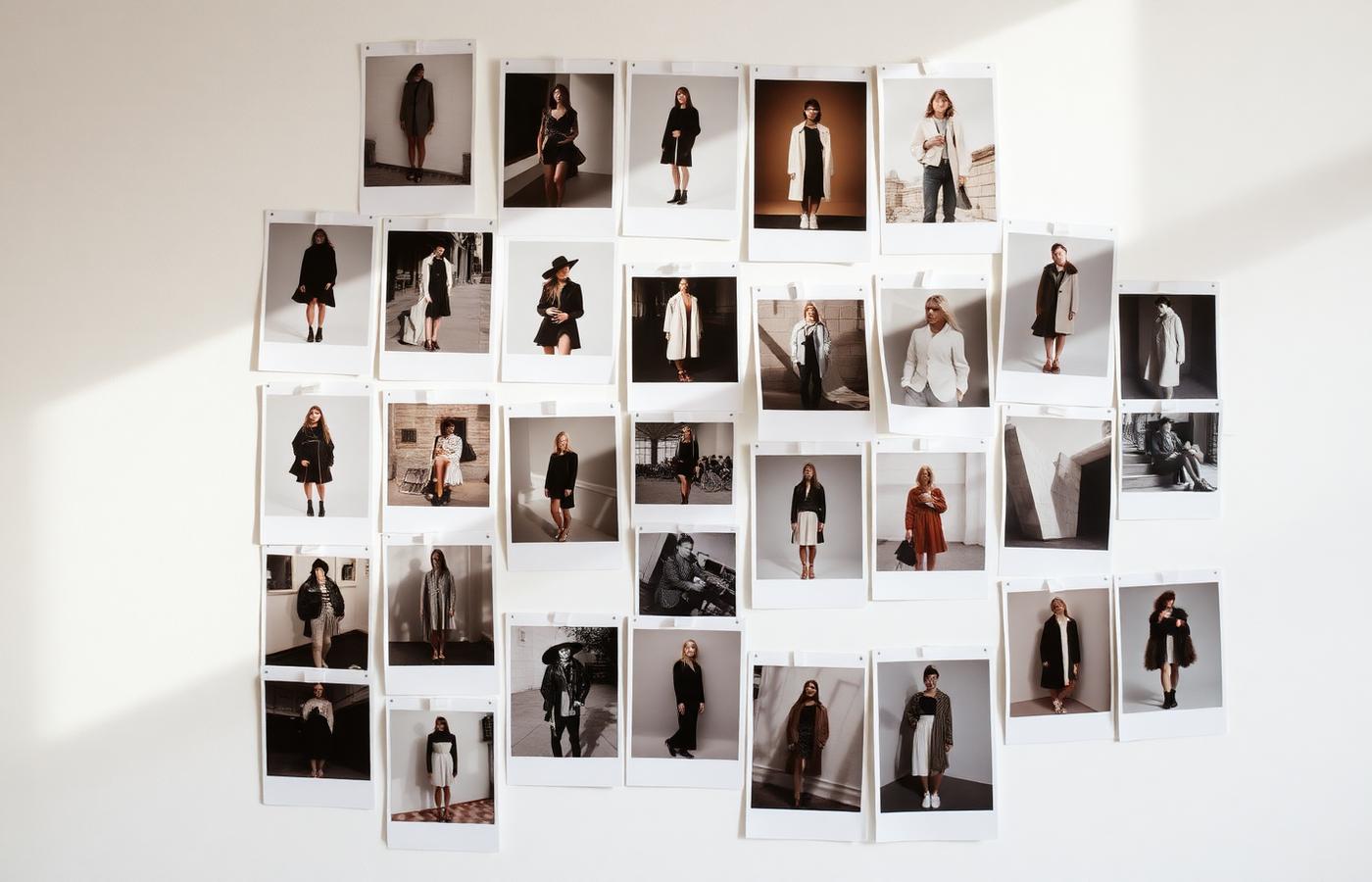
Generate freely: five or six candidates for a single slot in the wardrobe. Judging one look on its own is almost impossible, because there is no reference point. Judging it against five siblings is easy.
Keep the variables tight while you do it. Same reference photo, same pose, one thing changing at a time — colour, or cut, or the garment itself. If three things change between two renders, the comparison tells you nothing about any of them.
Three passes, one criterion each
Go through the gallery three separate times, quickly. Never mix criteria in a single pass.
Pass one — silhouette. Cover the colour in your mind and look only at shape. Does the outline flatter? Where does the eye stop? Pass anything whose shape does not work, without discussing it. Most of the gallery leaves here, and that is the point.
Pass two — colour. Take the survivors and hold them against your palette swatches. Face-adjacent colour gets the strictest treatment; colour below the waist gets latitude.
Pass three — life fit. Would you wear it this week, to somewhere you are actually going? This pass kills the beautiful, correct, entirely theoretical outfit — which is exactly what it is for.
Three passes over twenty looks is faster and far more accurate than one agonised pass, because each pass asks a question with an obvious answer.
Then compare in pairs
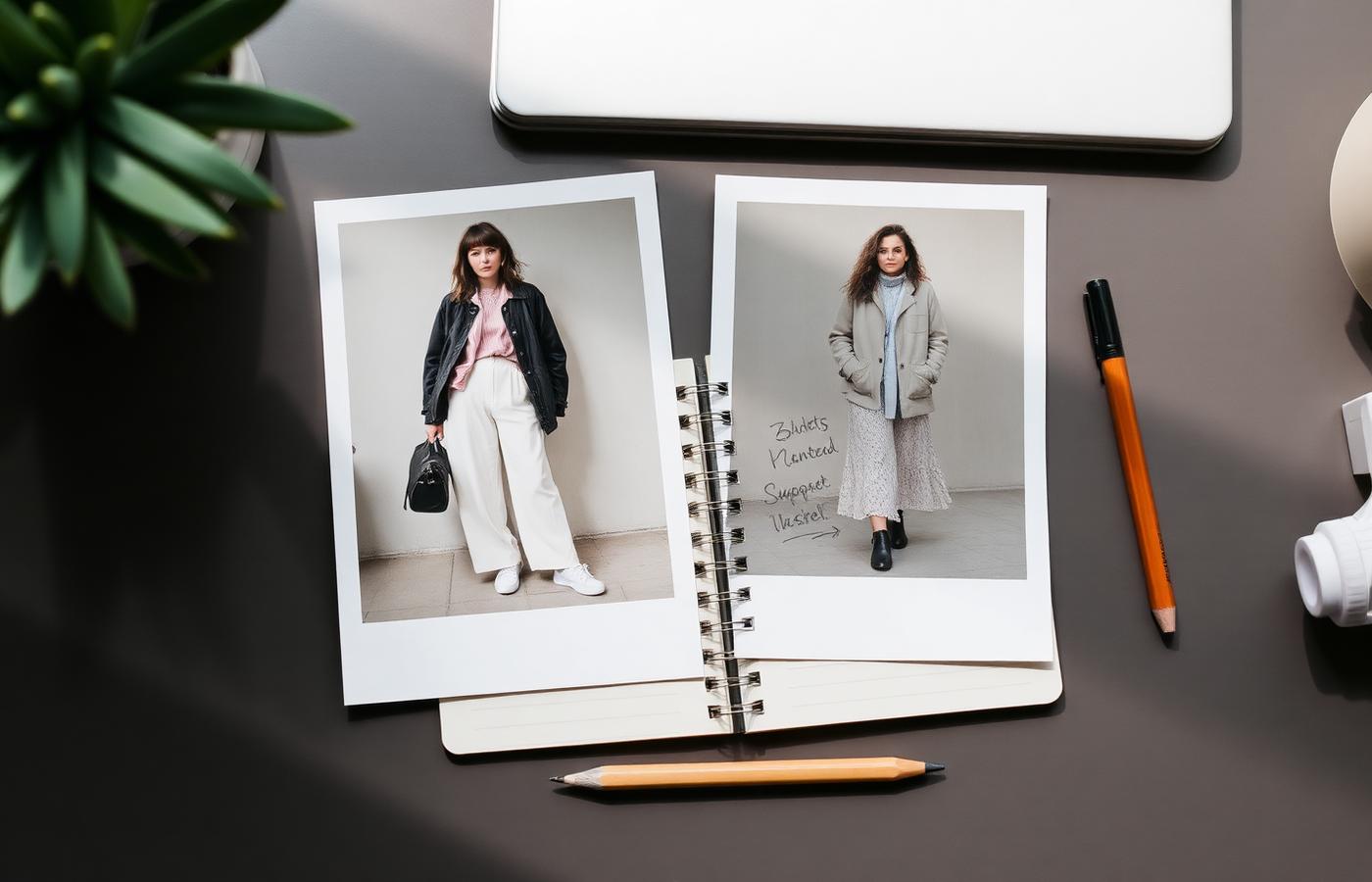
Once you are down to four or fewer, stop scanning and compare in pairs. Put two side by side and pick a winner. Then the winner against the next. A tournament of two-way choices is how humans actually make reliable decisions; a grid of eight is how we make random ones.
Compare mode exists for this stage, not the first one.
Write the reason, not the verdict
"Yes" and "no" are worthless a week later. One clause is enough and it has to say why:
- Shape good, colour drains me.
- Right colour, hem too long — needs tailoring.
- Beautiful, nowhere to wear it.
- Nearly identical to the jacket I already own.
Reasons accumulate into a personal brief. After thirty of them you stop generating the wrong looks in the first place, which is the real saving.
Use the decision buckets properly
Three buckets, three different meanings:
- Like — the shape and colour work; this is a template to generate more of, not necessarily a purchase.
- Pass — filed with a reason, so the same mistake is not repeated in a different brand.
- Buy — a real intention, with the product link attached.
Keep the buy list short. If it exceeds a handful, it is a wish list rather than a decision, and it will quietly stop being either.
Beat the fatigue mechanically
- Cap the session. Twenty renders, then stop. Judgement quality drops well before enthusiasm does.
- Judge in the same light and the same room every time. Comparing this morning's screen to last night's is comparing two different photographs.
- Take a gap between generating and judging. Ten minutes is enough to lose the sunk cost of having made something.
- Tag by occasion so you are choosing between comparable things — five work looks, not two work looks and three evening looks.
- Force elimination. In any group of five, one must go. Ranking is easier than scoring.
When two options genuinely tie
A tie means the two looks are equally good and one criterion has not been applied yet. Try, in order: which is cheaper to make wearable — alterations, a missing shoe, a different top; which combines with more of what you already own; which one you would wear sooner. One of those three always breaks it.
If none of them do, keep neither. A tie with no tiebreak is a sign the slot is already filled.
The habit
Render wide. Three passes, one criterion each. Pairs at the end. A reason on every decision. A cap on the session.
Done consistently, the gallery stops being a pile of options and starts being a filter — and the looks you keep are the ones you actually wear.